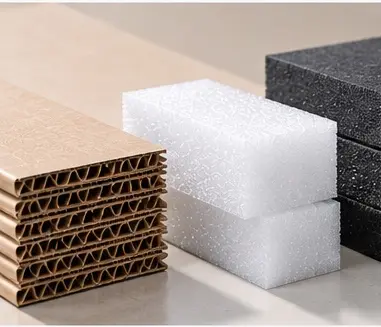
Cost and supply
Material and cost comparison
Review material composition, cost drivers, and data needs before sampling or production.
Start a packaging discussionPackaging design and prototyping service
Based on product size, weight, shipping conditions, photos, and drawings, GIN helps organize requirements and discuss corrugated boxes, EPE cushioning, molded pulp, and paper-based structure directions.
If convenient, please share dimensions, weight, shipping method, and any past damage records; GIN can use them to discuss structure, material choice, dimensional weight, and damage risk.
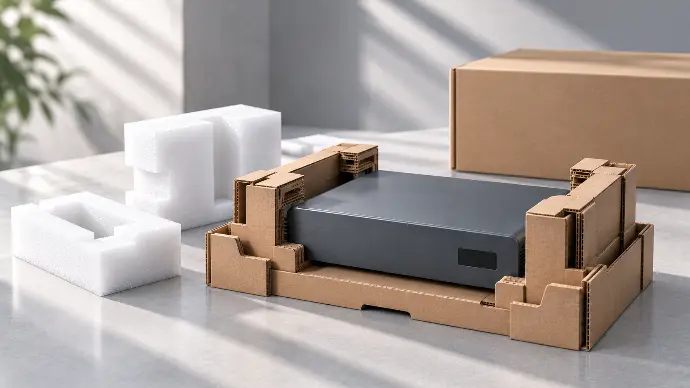
GIN Packaging Collaboration Platform
Help customers and the GIN team align packaging direction more clearly.
Capability paths
Explore material options, structural protection, transport testing, and sampling-to-production support.
Cost and supply
Review material composition, cost drivers, and data needs before sampling or production.
Start a packaging discussion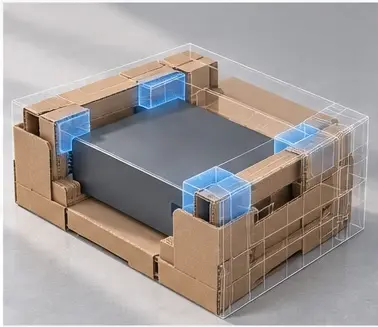
Engineering / QA
Ready to discuss a packaging direction?
View design process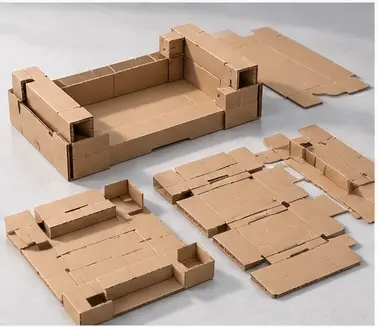
ESG / Material
Ready to discuss a packaging direction?
Start a packaging discussion
Contact
Dimensions, weight, photos/drawings, quantity, and shipping method can be organized step by step.
Go to inquiryPackaging capabilities
Packaging decisions should balance product protection, cost control, shipping conditions, and future data needs.
Design cushioning logic around product size, weight, and transport conditions to avoid over-packaging.
Use samples to confirm protection, assembly, and production conditions before scaling.
Turn production specifications into usable data for supply, procurement discussion, and future tracking.
Evaluate materials, structure, cost, and reduction direction with production feasibility in mind.
Plan cushioning materials around weight, fragile points, and shipping method while controlling usage.
Ask about this materialMolded pulp and paper cushioning can support plastic reduction when protection and production conditions are confirmed.
Ask about this materialUse sampling to confirm structure, assembly, material usage, and production risk before rollout.
View service workflowCross-region supply requires clear packaging specifications, material information, and shipping-protection criteria.
Northern, Central, and Southern Taiwan
East / South China
Start a packaging discussion
Demand collaboration flow
The public site helps collect packaging requirements first. When a project moves forward, photos, drawings, attachments, and confirmations can continue in the Packaging Collaboration Platform.
Product size, weight, photos, drawings, quantity, and shipping conditions can be added step by step; full specifications are not required at first contact.
The service team reviews the information and discusses corrugated boxes, EPE, molded pulp, paper cushioning, or combined packaging directions.
Sampling changes, attachments, and confirmation notes can be kept together to reduce communication gaps across teams.
Sustainable packaging and procurement support
With ESG, EPR, PPWR, and customer sustainability expectations, packaging is no longer only a box purchase. GIN helps teams evaluate materials, structures, usage, and sampling conditions so packaging can move toward reduction, recyclability, controlled cost, and better data readiness.
GIN organizes material, weight, structure, and specification data as a practical basis for later ESG, EPR, or export-compliance review, without presenting it as a legal guarantee.
Material choiceCost reviewSampling to productionData readinessReview product size, shipping method, and protection needs to reduce excess material, wasted space, and unnecessary structure.
Compare paper-based, cushioning, composite, and alternative materials while balancing protection, cost, and recyclability.
Estimate cost factors across sampling, tooling, materials, processing, and production quantity before changing packaging direction.
Clarify package strength, transport conditions, supply stability, and customer data needs to reduce damage and specification gaps.
Packaging discussion
Photos, dimensions, weight, quantity, and shipping conditions are useful. If the information is incomplete, GIN can still start from the current damage, scratch, cost, or material-substitution concern.
The full form is kept on the contact page; the homepage now stays focused on routing and orientation.
Resource center
If you are comparing materials, reducing damage, preparing samples, or organizing project information, start with articles and FAQs. When a deeper review is needed, share product dimensions, photos, or shipping conditions.
Start with product conditions, shipping risk, material direction, and cost range for a focused discussion.
Start a packaging discussionQuality and certification capability